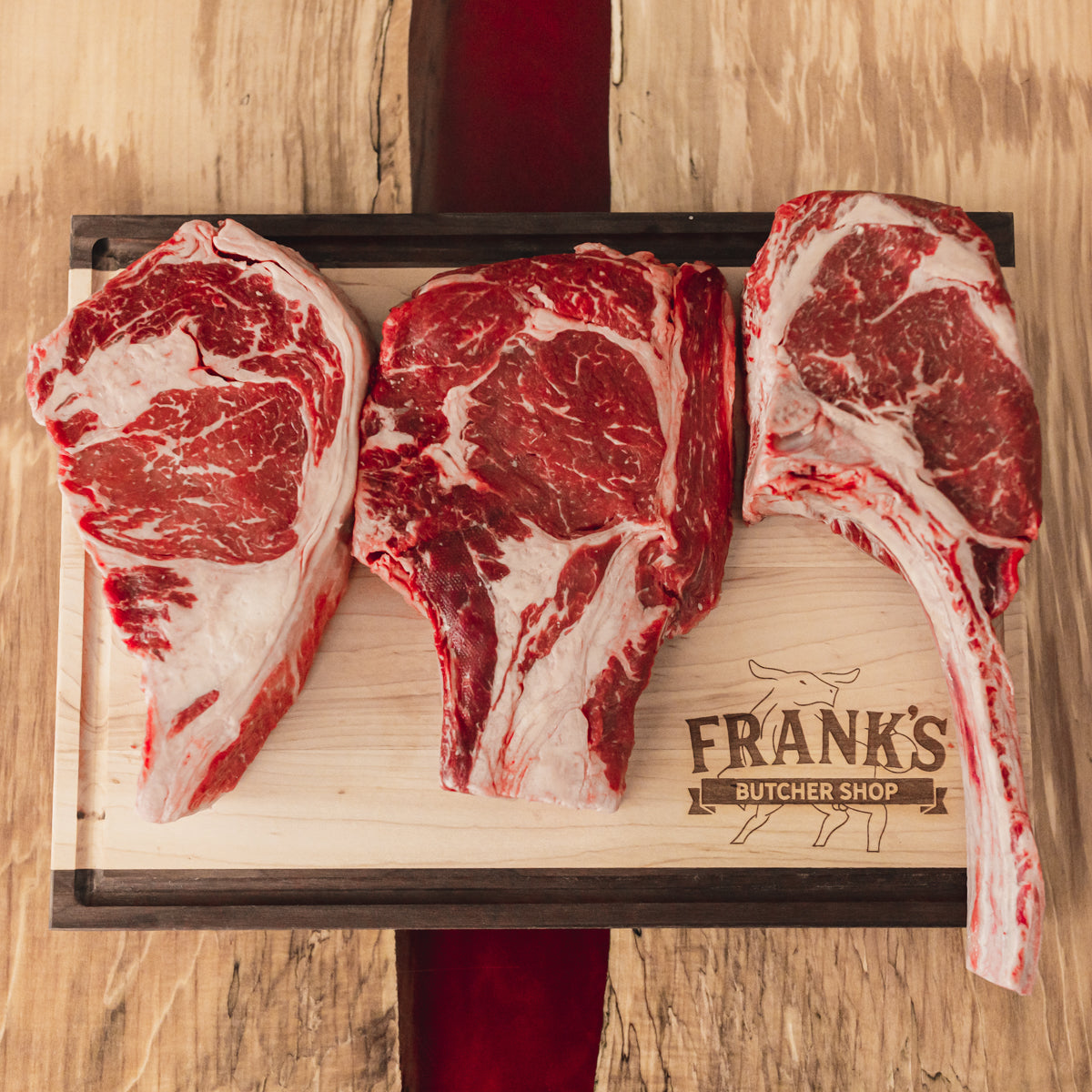


Bavette is one of those cuts people notice but aren't sure about, simply because the name gives nothing away. It's a French word, and the label rarely explains what it means.
The cut itself is easy to understand. A bavette is flap steak from the bottom sirloin, with a loose grain and good marbling. Frank's Butcher Shop sells it as Beef Sirloin Bavette 1.5 lbs for $21.77, described in three words:
"Flavor, Flavor, Flavor!"
Cook it right and it's one of the simplest steaks to get good results from.
Bavette, Flap Steak, Bottom Sirloin: One Cut, Three Names
Sirloin is not one cut. It's a whole section of the animal, sitting toward the rear back, just ahead of the round and behind the short loin. The top sirloin gives you the familiar steaks. The bottom sirloin gives you the bavette and the tri tip.
Frank's beginner's guide to beef sirloin explains the difference. Bottom-sirloin cuts are a touch firmer than top sirloin, but they have more flavor and take a marinade very well. "Bavette" is the French name for one of them. On an American label, it's called flap steak. Same cut, same cooking rules.
What a "Loose Grain" Means for You
Grain is the direction the muscle fibers run. The bavette's grain is looser and more open than a top-sirloin steak's, and it has more marbling.
That matters in three ways. Marinade soaks in further. The steak is flat, so it cooks in minutes. And the way you slice it matters more than with most steaks. Frank's says it plainly: with bavette in particular, slicing against the grain makes a huge difference. Cut across the fibers and each bite is short and tender. Cut along them and the same steak feels chewy.
How to Cook Bavette Steak, Step by Step
Frank's advice for this cut is one line: cook it hot and fast, either on a char broiler or in a pan.
Step 1: Let it come to room temperature - Take the steak out of the fridge 30–45 minutes before cooking. A cold steak in a hot pan cooks unevenly, so the outside is done before the middle catches up.
Step 2: Dry it, then season it - Pat the steak dry with paper towels. Wet meat steams instead of browning. Season both sides well with kosher salt and fresh cracked black pepper.
Step 3: Get the pan very hot - Heat a cast-iron skillet on high for 2–3 minutes before you add oil. Then add avocado, canola or refined coconut oil and swirl it around.
Step 4: Sear it and leave it alone - Lay the steak down away from you and don't move it. Frank's suggests 3–4 minutes per side for sirloin cuts, and 4–5 minutes per side for thicker steaks. Go shorter with a flat cut like this one. The crust only forms if the meat stays still on the hot pan.
Step 5: Baste it with butter - After you flip it, add 2 tablespoons of butter, two smashed garlic cloves, and a sprig of thyme or rosemary. Tilt the pan and spoon the foaming butter over the steak for a minute or two.
Step 6: Take it off at the right temperature - Frank's numbers are rare 120–125°F, medium rare 130–135°F (their pick for the best flavor and texture), medium 140–145°F, and well done 160°F and up. On the grill, high heat for 4–5 minutes per side gives you medium rare. Use a thermometer instead of a timer, because a flat steak passes medium rare quickly. Frank's points to the oven-finish step for thicker cuts, like the sirloin baseball steak or steaks over 1.5 inches.
Step 7: Rest it, then slice against the grain - Let it sit on the board for 5–7 minutes so the juices settle. Then cut across the fibers.
The Marinade Window Most People Miss
Because the grain is open, a bavette soaks up marinade faster than a thick steak does. That's good news, but it also means you can overdo it.
Frank's suggests soy sauce, garlic, olive oil, and citrus, with at least two hours in the fridge. Two to eight hours is the sweet spot. Don't go past 24 hours. The acid keeps working, breaks the meat down too much, and it turns mushy instead of tender. That's why a heavily marinated steak sometimes feels soft rather than juicy.
Don't Trim Away the Flavor
Frank's tip for this cut is a warning, not a technique: don't get carried away trimming it, because the fat is flavor here.
It comes down to timing. In a long braise, you can trim the fat and lose very little. In a three-minute sear, there's no time for fat to cook away, so it bastes the steak while it cooks. Trim after cooking, if you trim at all.
Best Ways to Serve Bavette Steak
Sliced thin against the grain, bavette is great in fajitas and tacos. The loose grain and the marinade make it a natural fit. It also works as a plain sliced steak, and 1.5 lbs gives you enough to share.
Frank's also lists it braised or in the crockpot, which is unusual for a hot-and-fast steak. One package can go either way, depending on the weather and your mood.
Two More Sirloin Cuts Worth Knowing

If you like the bavette, two more cuts from the same section are worth a look.
Beef Tri Tip Roast ($46.29) is the closest relative, because Frank's lists tri tip alongside bavette as a bottom-sirloin cut. It's 2.5 lbs, fairly tender and boneless, and Frank's calls it great grilled and sliced against the grain, the same instruction the bavette gets.
Beef Sirloin Coulotte Roast ($53.31) comes from the top of the sirloin and carries a fat cap. It's also called a picanha cut and is a staple in Brazilian cooking, and Frank's says cooking this 2.5 lb roast hot and fast is the way to go.
The theme is easy to spot. These sirloin cuts like high heat, and both the bavette and the tri tip are better sliced across the grain.
Bavette vs Skirt vs Flank
All three are flat cuts with a clear grain, but they're not the same.
Bavette 1.5 lbs, loose grain, well marbled, cooked hot and fast, and great with a marinade.
Beef Skirt Steak ($29.50) is a long, thin 20 oz cut on the leaner side. Its fat cap soaks up marinades and seasoning very well. Frank's likes it cooked high in a smoker, then sliced thin for tacos or fajitas.
Beef Flank Steak ($43.08) a 24–26 oz cut that can feed the family. It's great on the grill or for taco night, and Frank's suggests carne asada, or rolling it with provolone and spinach. Slice the tails off so it cooks evenly, and use the scraps as stew meat.
Pick bavette for marbling and flexibility, skirt when you want to show off a marinade, and flank when you're feeding a family.
Frequently Asked Questions
Is bavette the same as flap steak?
Yes. Bavette is the French name. Frank's sells it as Beef Sirloin Bavette, a bottom-sirloin cut.
Why was my bavette chewy?
Usually the slicing or the cooking time. Cut across the fibers, and stop at 130–135°F for medium rare.
How long should I marinate it?
Two hours at least, two to eight hours ideally, and never more than 24.
Should I trim the fat first?
No. Frank's says the fat is the flavor in this cut, and a quick sear won't cook it away.
Is bavette tender?
Bottom-sirloin cuts are a touch firmer than top sirloin, but they have more flavor. Dry-aging and slicing against the grain do the rest.
Can I slow cook it?
Yes. Frank's lists braising and the crockpot along with the grill.
How do I buy it?
It's $21.77 for a 1.5 lb cut. Order online, or pick it up at Hudson, usually ready in 2 to 4 days.
Ask For It By Name
The bavette isn't hard to cook. It just needs explaining. Once you know it's a loose-grained, well-marbled bottom-sirloin cut that wants high heat, a short marinade and a knife across the grain, it becomes a cut you'll reach for often.
Frank's hand-cuts its beef from cattle born, raised and processed in Wyoming, dry-aged for at least 14 days before the butchers carve into it. That step builds flavor and naturally tenderizes the meat before it ever reaches your pan. Ask for the bavette by name, or browse the full beef collection and add a 1.5 lb cut to your next order.