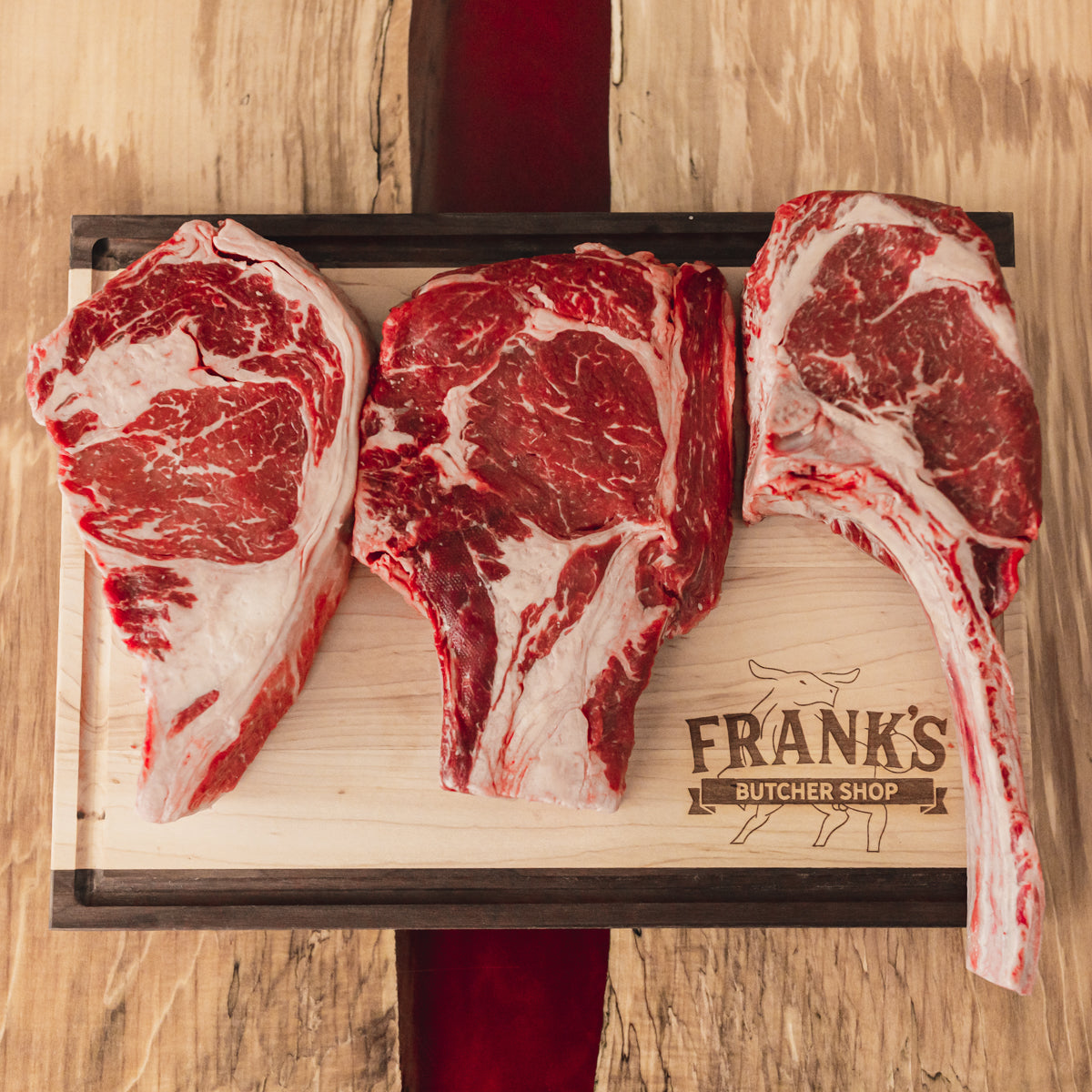


Not everyone has a grill. And even if you do, Wyoming winters or a rainy Tuesday evening mean you're not always going to be firing it up outside.
The good news is that some of the best steaks in the world are cooked indoors.
In fact, many professional chefs prefer cooking steak on a cast-iron skillet because of the control it gives them over heat and the incredible crust it creates.
If you've ever wondered how to cook a steak indoors without a grill and actually get great results, this guide is for you.
The Right Equipment Makes All the Difference
Before we talk technique, let's talk tools. The single best piece of equipment for cooking steak indoors is a cast-iron skillet. Here's why: cast iron holds and distributes heat evenly and can withstand extremely high temperatures, both of which are essential for achieving a perfect sear.
A stainless steel pan works as a second choice. Avoid non-stick pans for steak; they can't handle the heat needed for a proper crust.
You'll also want:
• A pair of kitchen tongs
• A meat thermometer
• A heavy-bottomed pan or oven-safe skillet
• Butter and garlic (for basting)
• Good ventilation, open a window or turn on your range hood
Choose the Right Cut

Not all steaks cook the same way indoors. The best cuts for indoor cooking are:
• Ribeye: Excellent fat marbling keeps it juicy on high heat. One of the best for pan-searing. Shop Beef Rib Eye Steak 1-1/4" Boneless.
• NY Strip: Firm, flavorful, and holds up perfectly in a cast-iron pan. Available as Beef NY Strip Steak Boneless.
• Sirloin: Lean and delicious. A little thinner, so it cooks faster indoors. Try Beef Sirloin Steak.
• Filet Mignon: Ultra-tender and benefits from the butter-basting technique. Try Beef Tenderloin Center Cut Filet.
• Flat Iron: Underrated for indoor cooking. Lean, flavorful, and quick-cooking. A great everyday option.
Step 1: Start with room-temperature Steak
Take your steak out of the refrigerator 30–45 minutes before cooking. A cold steak hitting a hot pan cooks unevenly; the outside gets overcooked before the inside reaches temperature. Room temperature means even cooking from edge to center.
Step 2: Season Simply and Generously
Pat the steak completely dry with paper towels; this is crucial. Moisture is the enemy of a good sear. Season both sides generously with kosher salt and freshly cracked black pepper. That's all you need. The quality of the beef, especially Wyoming dry-aged beef, does the rest.
Step 3: Get the Pan Screaming Hot
Place your cast-iron skillet over high heat for 2–3 minutes before adding any oil. The pan needs to be extremely hot to create the Maillard reaction, the chemical process that creates a deep brown, flavorful crust on the surface of the meat.
Once hot, add a high-smoke-point oil: avocado, canola, or refined coconut oil. Swirl to coat.
Step 4: Sear the steak
Carefully lay the steak in the pan away from you (to avoid oil splatter). Do not move it. Let it sear undisturbed for 4–5 minutes per side for medium rare.
Resist the urge to push or move the steak. A crust only forms when the meat has full, uninterrupted contact with the pan surface.
Step 5: Butter-Baste for Extra Flavor
After flipping the steak, add 2 tablespoons of butter, 2 smashed garlic cloves, and a sprig of fresh thyme or rosemary to the pan.
Tilt the pan slightly and use a spoon to continuously baste the steak with the foaming butter for 1–2 minutes. This is the move that separates a good indoor steak from a great one.
Step 6: Finish in the Oven (for Thick Cuts)
For steaks thicker than 1.5 inches, use the reverse or oven-finish method: after searing, transfer the oven-safe skillet to a 400°F oven for 4–6 minutes to finish cooking to your desired temperature.
Target internal temperatures:
• Rare: 120–125°F
• Medium-rare: 130–135°F
• Medium: 140–145°F
Step 7: Rest Before Cutting

Remove the steak from the pan and let it rest on a cutting board for 5–7 minutes. Do not skip this. Resting allows the juices to redistribute so they stay in the meat rather than on your cutting board.
A Quick Note on Smoke
Indoor steak cooking creates smoke; that's normal and actually a sign you're doing it right. Turn on your range hood, open a window, and disable your smoke alarm temporarily if needed. It's worth it.
Frequently Asked Questions
Q: Can you cook a good steak without a grill?
A: Absolutely. A cast-iron skillet on a high-heat stovetop, combined with the butter-basting technique and an oven finish for thicker cuts, produces steaks that rival or surpass anything off a backyard grill.
Q: What oil should I use to cook steak indoors?
A: Use a high-smoke-point oil such as avocado oil, canola oil, or refined coconut oil. Avoid olive oil for searing; its lower smoke point means it will burn at the temperatures needed for a proper crust.
Q: How do I get a good crust on steak in a pan?
A: Three things: dry the steak completely with paper towels before cooking, get the pan extremely hot before the steak goes in, and don't move the steak once it's placed in the pan. Undisturbed contact with a hot surface is what creates the crust.
Q: Should I cook steak on the stovetop or in the oven?
A: For thin steaks (under 1 inch), stovetop only is fine. For thicker steaks (1.5 inches or more), a combination works best: sear on the stovetop to build a crust, then finish in a 400°F oven to reach the desired internal temperature evenly.
Q: What is the best steak to cook indoors for a beginner?
A: Sirloin steak is the best starting point for beginners. It's forgiving, cooks quickly, has great flavor, and is less expensive than premium cuts. Once you've mastered the technique with sirloin, try ribeye or NY strip for a richer, more indulgent result.
Where to Buy Great Steak for Indoor Cooking
Great indoor steak starts with great beef.
At Frank's Butcher Shop, we offer hand-cut, Wyoming-born, dry-aged steaks in a wide range of cuts, from ribeye and NY strip to sirloin and filet.
For more cooking tips, read the blog on Steak Night at Home: How to Create a Restaurant-Style Dinner Experience, a great companion guide to this one.