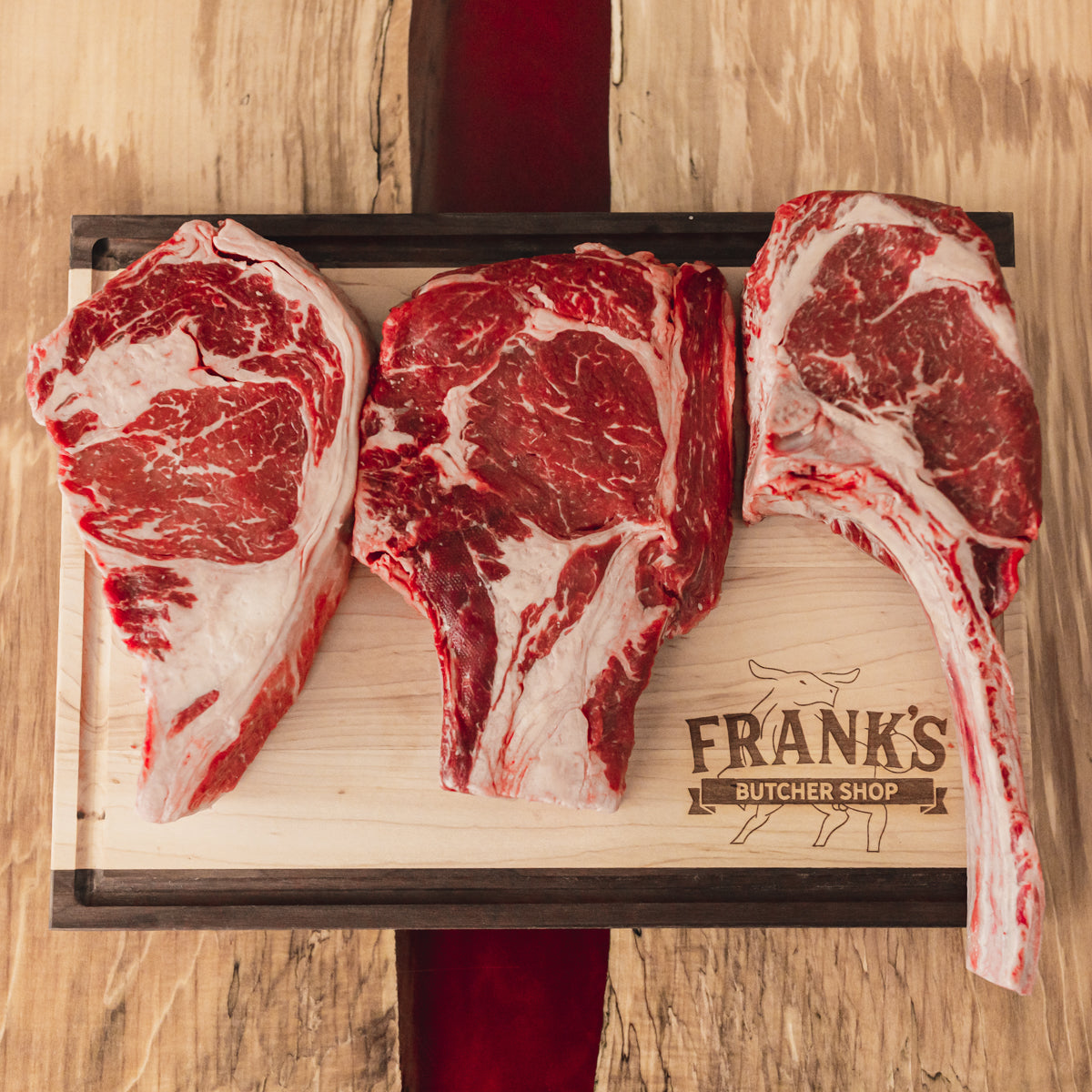

Ribeye, Sirloin, and New York Strip: The three classic steakhouse favorites, but each delivers a totally different bite.
The texture, flavor, and even the cooking method change depending on where the cut comes from.
This guide breaks down how these popular cuts differ, what they taste like, and which one best suits your style of cooking.
The Essence of Each Cut
Each of the three cuts: ribeye, sirloin, and strip comes from a different section of the cow, which influences tenderness, marbling, and flavor. Let’s look closer at their profiles.
|
Cut |
Location |
Signature Traits |
Best For |
|
Ribeye |
Rib section |
Deep marbling, rich flavor |
Grilling or pan-searing |
|
NY Strip |
Short loin |
Balance of tenderness and chew |
Broiling or cast iron sear |
|
Sirloin |
Behind short loin |
Leaner, hearty texture |
Roasting or slicing dishes |
Ribeye: Rich, Tender, And Full Of Flavor
The boneless ribeye and bone in ribeye steak are prized for their marbling, the thin veins of fat that make the cut melt-in-your-mouth tender. This fat renders during cooking, infusing the beef with a buttery taste few cuts can match.
A tomahawk ribeye steak is essentially a ribeye with extra bone attached, creating a beautiful presentation and added flavor thanks to the marrow’s natural richness.
When cooked properly, the beef tomahawk steak develops a crust outside and a juicy softness inside that defines fine steakhouse flavor.
Expert Tip: When pan-searing, use high heat for two to three minutes per side, then finish in the oven. For extra juiciness, rest your steak for five minutes before slicing to allow the juices to redistribute evenly.
Ribeyes pair perfectly with simple sides like roasted garlic potatoes and sautéed green beans, letting their flavor remain the star of the plate.
Sirloin: Balanced and Lean
The beef sirloin roast comes from a slightly more exercised part of the animal, giving them a firmer texture and leaner profile. Despite being less marbled than ribeye, sirloin offers a deeper beef-forward flavor that appeals to those who prefer a hearty bite.
Cuts like top sirloin coulotte roast can be roasted, marinated, or sliced for stir-fries. They also hold up well in dishes like steak salads or kebabs, where a leaner texture shines.
Sirloin is often more affordable than other premium steaks but maintains excellent quality when sourced from grass-fed or well-finished cattle such as Wyoming pure beef that’s known for its clean, rich flavor.
Quick Tip: To lock in juices and tenderness, always slice sirloin against the grain after cooking.
NY Strip: Perfect Middle Ground

Somewhere between the tenderness of ribeye and the leanness of sirloin sits the ny strip steak. Known for its perfect shape and fine texture, the New York Strip Steak comes from the short loin, near the back of the cow where muscles are less active.
This means it’s naturally tender but with a satisfying chew, perfect for those who love balanced flavor and structure.
Grass-Fed NY Strip Steak enhances this profile with grass-fed depth, giving the meat a clean, complex flavor. The boneless NY strip steak version is a great everyday choice for grilling or pan-frying because it cooks evenly and needs minimal trimming.
Chefs often choose beef loin NY strip steak for its versatility and balanced fat content. You can cook it quickly with just salt, pepper, and butter to achieve that golden sear.
Filet Mignon vs. The Main Three Cuts
If ultra-tender steak is your priority, nothing compares to Beef Filet Mignon. This cut comes from the tenderloin, an inactive muscle that yields a buttery, delicate texture. It’s dramatically softer than strip or sirloin and pairs beautifully with sauces and sides.
For refined dinners, options like a Filet Mignon Beef Cut or a center cut beef tenderloin bring restaurant-quality luxury into your kitchen. When wrapped in hickory smoked bacon as a bacon wrapped Filet Mignon, this dish combines tenderness with a light smoky edge.
Ribeye vs. Sirloin vs. NY Strip: Taste and Texture Comparison
|
Feature |
Ribeye |
Sirloin |
NY Strip |
|
Texture |
Juicy, buttery-soft |
Firm, lean, slightly chewy |
Tender with mild chew |
|
Flavor |
Rich and beefy |
Balanced and hearty |
Refined, slightly smoky |
|
Marbling |
Heavy |
Light |
Moderate |
|
Best Cooking Methods |
Grilling, cast iron sear |
Broiling, roasting |
Pan-sear, grill |
|
Cost |
Premium |
Moderate |
Premium |
Cooking Differences to Note
Cooking style matters as much as cut selection.
• Ribeye: Ideal for grilling or searing, benefiting from high-heat cooking that caramelizes the fat.
• Sirloin: Cooks well under moderate heat, avoiding over-drying.
• NY Strip: Best in cast-iron for that steakhouse edge-to-edge crust.
You can also check out deeper flavor profiles by experimenting with seasoning techniques. Our detailed insight into seasoning balance and marinade ratios helps you find the perfect salt and pepper combination for each cut.
How To Choose The Right Cut For You?
When shopping from a trusted butcher such as Frank’s, variety and freshness are part of the guarantee. Here’s how to decide which cut matches your needs:
• Choose ribeye when you want maximum flavor and tenderness, perfect for celebrations.
• Pick sirloin for everyday meals, meal prep, or leaner options.
• Go for NY strips when you want a balanced texture and classic steakhouse presentation.
• Select filet mignon or beef tenderloin center cut for special occasions or refined plating.
Storage and Meal Planning Tips

High-quality fresh beef stays at its best when handled properly. Here’s how:
• Refrigerate raw cuts up to 3 days or freeze for up to 6 months.
• Store leftovers in airtight containers and consume within 48 hours.
• Vacuum-sealed beef packages help maintain freshness if you plan to stockpile bulk items.
FAQ’s
Q: Which is the most tender steak among ribeye, sirloin, and NY strip?
A: Ribeye is the most tender due to its high marbling and fat content. NY strip comes close, offering balanced tenderness with a firmer chew. Sirloin is the leanest of the three.
Q: Why is ribeye more expensive than sirloin?
A: Ribeye’s intense marbling and flavor-rich fat distribution make it a premium cut, requiring more selective butchering and aging.
Q: What’s healthier: ribeye or sirloin?
A: Sirloin is leaner with lower fat, making it a better option if you’re watching calories. Ribeye offers more omega-rich fats but higher calories per gram.
Q: Is grass-fed beef really better?
A: Yes. Grass-fed beef contains more natural nutrients, a richer flavor, and less saturated fat. It’s also produced in more sustainable ways.
Q: What’s the best way to cook NY strip steak?
A: A hot cast-iron skillet delivers restaurant-level sear. Add butter and herbs at the end for extra aroma and flavor depth.
Final Thoughts
Every cut, from Beef Rib Eye Steak to boneless NY strip steak, offers a distinct taste. Ribeye delivers tenderness, sirloin offers versatility, and the strip balances both worlds. Knowing what sets them apart helps you cook with more confidence and enjoyment.
Getting well-sourced beef transforms simple cooking into something memorable. Browse Frank’s Butcher Shop to discover premium options you can trust for quality and flavor every time.
The next time you’re planning dinner, choose your cut with purpose because a great steak is not just cooked, it’s chosen with understanding.