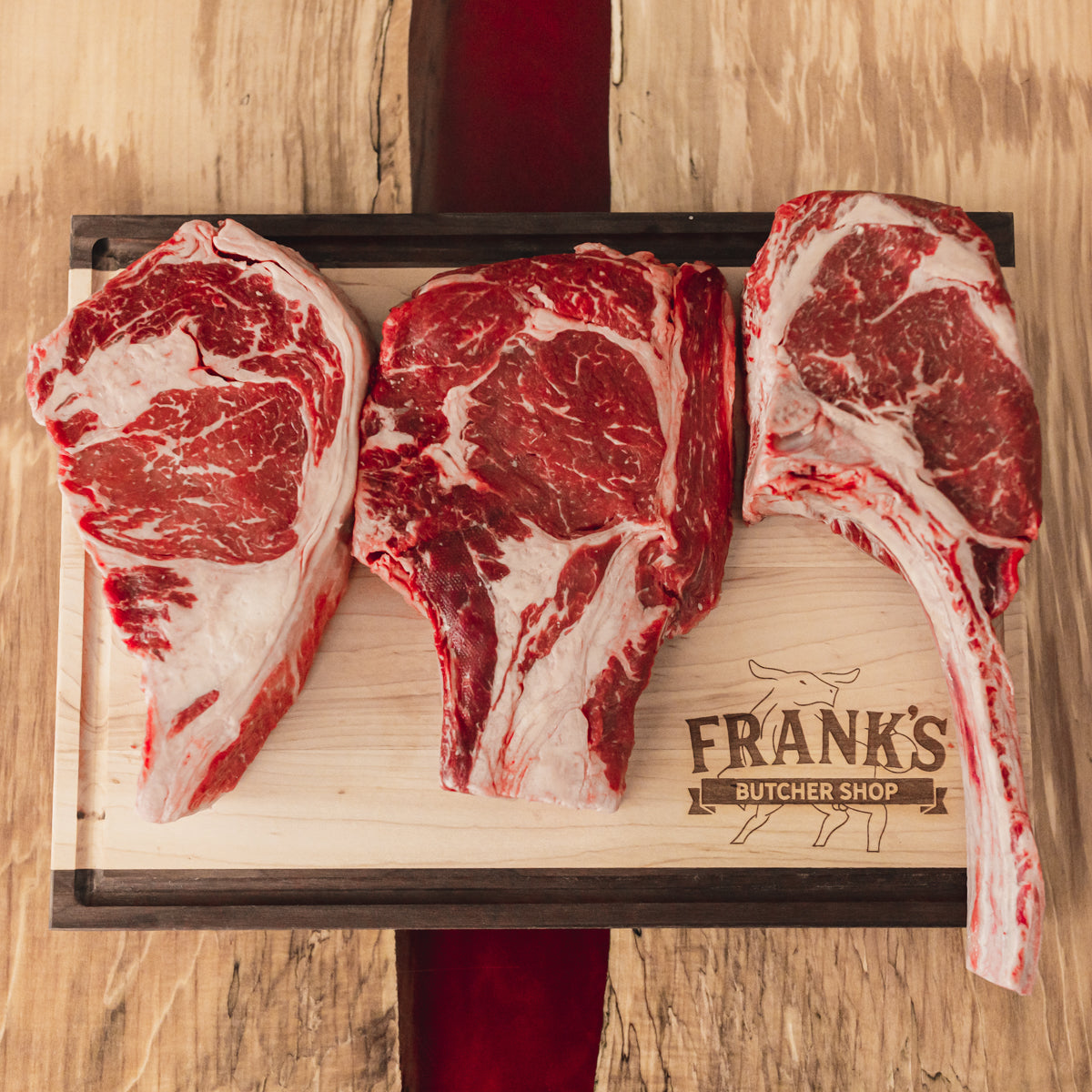

Every piece of beef is made up of long muscle fibers that run in a particular direction, known as the “grain”.
When you slice with those fibers, you leave them long and intact, which makes the meat chewier.
When you slice across them, you shorten the fibers, so each bite feels more tender and easier to chew.
In simple terms:
• With the grain = long, rope‑like fibers = tougher chew.
• Against the grain = short fibers = softer, more tender mouthfeel.
Even high‑quality beef benefits from this, but it matters most on active muscles and leaner cuts, where fibers are more developed and can otherwise feel firm.
Why cutting against the grain is important for tenderness?
Tenderness is influenced by the muscle, cooking method, and how you slice after cooking. Studies on beef muscles show that when slices are cut perpendicular to the muscle fibers, tenderness improves significantly compared to slices cut along the fibers.
This is especially valuable when you invest in Wyoming‑raised, dry‑aged cuts from a specialty butcher like Frank’s, where careful handling can help you taste the full advantage of that quality.
How to find the grain in any beef cut?
Before you cut, pause and look closely at the meat surface. Those fine lines or “striations” that all run the same way are the grain. On most steaks, it’s easiest to see while the meat is still whole and uncooked, so it helps to plan your slicing direction early.
Quick visual checks:
• Whole muscles: Look for long “rope‑like” fibers; they may run lengthwise along a roast or steak.
• Finer‑grained cuts (like tenderloin): Fibers are thinner, so the grain can be faint, but it is usually still visible at close range.
• Multi‑directional cuts (like tri‑tip): The grain can change direction partway through the cut, so you may need to rotate pieces as you slice.
If the grain is hard to see, gently bend the meat; fibers often show more clearly where the surface slightly stretches or separates
Universal method: How To Cut Against The Grain?

Once you can see the grain, the basic method is always the same:
• Position the meat so the grain runs left to right on your board.
• Hold your knife so the blade travels up and down (north–south), at roughly 90° to those lines.
• Use long, smooth strokes instead of sawing to avoid tearing the surface and losing juices.
For even more tenderness, especially on lean or hard‑working muscles, slice slightly on a bias at about a 45° angle and keep pieces on the thinner side.
This increases surface area, giving a more delicate bite and better presentation.
Quick Cut‑by‑Cut Reference Table
|
Cut / Product |
Where to Watch the Grain |
How to Slice for Tenderness |
|
NY strip steak / beef loin NY strip steak |
Lines run lengthwise |
Turn 90° and slice across |
|
Long central muscle |
Remove from bone, slice across |
|
|
Same as ribeye |
Separate from bone, then slice |
|
|
Fine, straight grain |
Cut into cross‑grain medallions |
|
|
Very visible long fibers |
Thin slices across the grain |
|
|
Grain may curve |
Adjust knife angle as you slice |
|
|
Florentine Steak / beef t bone steak |
Two muscles, two grains |
Separate, then slice each across |
Use this as a quick visual reminder for carving any of the most popular steaks and roasts.
Common mistakes when cutting beef

Avoiding a few frequent missteps goes a long way:
• Cutting too soon: Slicing before the meat has rested forces juices out and can exaggerate chewiness, even if you cut across the grain.
• Ignoring the grain on the board: Serving at the table and cutting at random angles can undo the careful work of cooking and resting the meat properly.
• Sawing with a dull knife: A dull blade tears fibers instead of making clean cuts, leading to ragged surfaces and more moisture loss.
Keeping a sharp carving or slicing knife and taking a moment to orient the grain before you cut will instantly elevate your results.
FAQ: People Also Ask
Q: What does cutting against the grain mean in steak?
A: Cutting against the grain means slicing perpendicular to the direction of the muscle fibers so each bite has shorter fibers and feels more tender and easier to chew.
Q: How do I find the grain on my steak?
A: Look closely for visible lines or “threads” running across the meat; those lines show the grain direction, and your knife should move across them, not along them, when you slice.
Q: Does cutting with the grain ruin the meat?
A: It does not ruin flavor, but it can make the texture noticeably chewier, especially on cuts like flank, skirt, and flat iron, which rely heavily on cross‑grain slicing for tenderness.
Q: Do I still need to cut against the grain on tender cuts like filet?
A: Yes, cuts such as tenderloin and High-quality beef cuts like grass‑fed ny strip steak benefit from cross‑grain slicing because it keeps the naturally soft texture consistent in every slice.
Q: Should I slice steak thin or thick?
A: For tougher or very grainy cuts, thinner slices across the grain feel softer; for rich, marbled cuts like a well‑rested beef sirloin roast, slightly thicker slices still feel tender when cut correctly.
Bringing It All Together
Cooking beef well is only half the job; the way you slice it completes the experience. Cutting against the grain is the step that turns good beef into a truly enjoyable meal.
Combined with thoughtful seasoning, careful doneness checks, and quality sourcing, it builds trust every time you prepare.
To practice these techniques with thoughtfully raised Wyoming‑born beef, browse the full range of steaks, roasts, jerky, and bundles available at Frank’s Butcher Shop.
Choosing the right cut and slicing it the right way means every plate you serve carries both care and confidence.