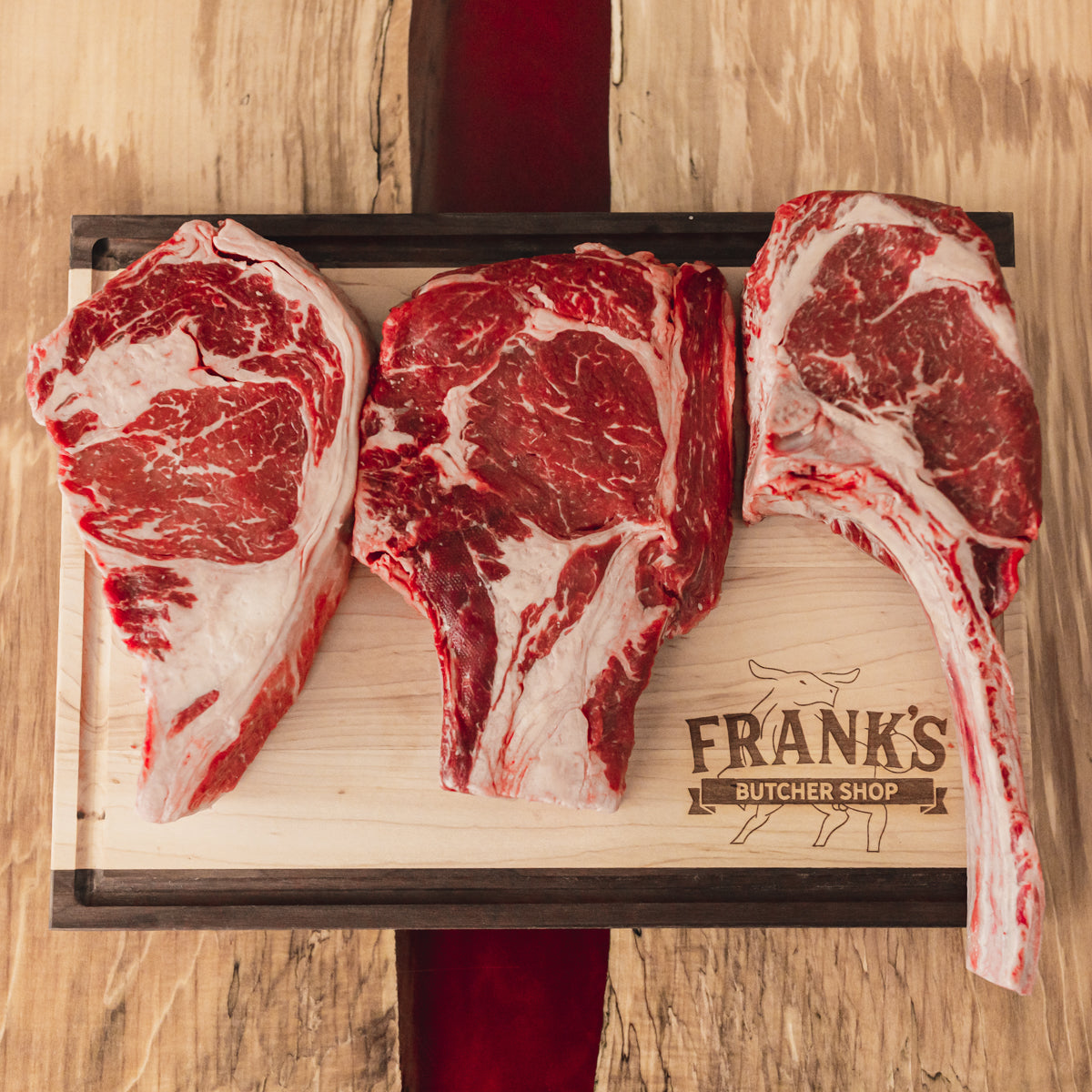


Some steaks look impressive. Some taste incredible. But only a few manage to be both and that’s why the Tomahawk and the bone-in Ribeye spark so much curiosity.
Both cuts come from the same primal section of the cow. Yet their taste experience couldn’t feel more different.
And if you’re deciding which one belongs on your grill this weekend, this breakdown will help you choose with confidence.
What Makes These Two Cuts So Popular?
The Tomahawk and bone-in Ribeye are prized for one simple reason: rich marbling that melts into buttery tenderness. They deliver the classic steakhouse experience, and both go perfect whether you’re grilling, pan-searing, or reverse-searing.
The main difference comes down to presentation, size, and heat distribution. And these factors influence everything like flavor intensity, cook time, cost, and even serving style.
Tomahawk Steak: The Showstopper
The Tomahawk is essentially a Ribeye with the full long rib bone still attached. That iconic handle-like bone creates its signature appearance. When people want drama, this is the steak they choose.
Key traits:
• Large portion size (typically 2+ pounds)
• Thick cut for deep crust development
• Strong visual impact
• Slower cooking but excellent heat retention
The cut known as a Tomahawk Ribeye Steak is often a celebration steak. It isn’t only about taste, it’s also about experience. When placed on a grill or table, it pulls all attention.
Bone-In Ribeye: The Flavor Focused Choice
Now let’s talk about the unsung star: the bone-in Ribeye. This cut offers all the depth of a Tomahawk but without the dramatic bone length.
Why do people love it?
• Slightly quicker to cook
• More affordable than a Tomahawk
• Ideal balance of marbling and tenderness
• Great for both everyday meals and special dinners
A bone in ribeye steak delivers near-identical richness and juiciness to the Tomahawk because they share the same muscle group. What you’re really trading is presentation for practicality.
Tomahawk vs Bone-In Ribeye Comparison:
|
Feature |
Tomahawk Ribeye Steak |
Bone-In Ribeye Steak |
|
Cut Location |
Same rib primal as ribeye, but includes the full long rib bone |
Ribeye from the rib primal with a shorter, trimmed bone |
|
Appearance |
Large, dramatic, long “handle” bone; show-stopping centerpiece |
Compact, classic steak shape; less dramatic |
|
Weight Range |
2–3 lbs on average |
12–20 oz on average |
|
Thickness |
Usually 2–3 inches |
Usually 1–1.5 inches |
|
Flavor Profile |
Deep beefy flavor with extra richness from bone and fat |
Bold ribeye flavor; slightly less intense than Tomahawk |
|
Cooking Time |
Longer due to thickness and bone length |
Faster and more even cooking |
|
Best Cooking Methods |
Reverse-sear, smoking, grilling on low-and-slow |
Grilling, pan-searing, broiling |
|
Price Range |
More expensive due to size and presentation |
More budget-friendly |
|
Ideal For |
Special occasions, gifting, holidays, impressing guests |
Weeknight meals, BBQs, everyday steak lovers |
If your priority is technique and control, the Ribeye wins. If your priority is drama, the Tomahawk wins.
Cooking Tips for Perfect Results
Below are high-performing, home-friendly methods that help each cut shine:
For Tomahawk
• Use a reverse sear for even doneness
• Let it rest longer due to thickness
• Cook indirectly first, finish with direct high heat
For Bone-In Ribeye
• Sear-first method creates a great crust
• Short rest time
• Medium-high heat is ideal
If you’re interested in improving steak texture and seasoning penetration, you can explore different brining techniques.
Choosing Based on Occasion
Pick Tomahawk if:
• You want a statement piece
• You’re hosting guests
• You enjoy slower, hands-on cooking
• You value the theatrical element of presentation
Pick Bone-In Ribeye if:
• You want consistent results
• You want faster cooking
• You want great value for premium flavor
• You cook steak often and want reliability
If you're learning doneness tests, it helps to use a guide that teaches how to check steak temperature without cutting into it. That becomes especially useful with thick cuts like Tomahawks.
How to Tell Which Steak Fits Your Cooking Style?

Ask yourself these three questions:
1. How much time do you want to spend cooking?
• If you want a fast, reliable cook: Ribeye.
• If you're planning a longer grilling session: Tomahawk.
2. Do you want a visual “wow” moment?
• If yes: Tomahawk.
• If not necessary: Ribeye.
3. How many people do you need to serve?
• Tomahawks can feed 2-3 comfortably.
• Ribeyes are perfect individual portions.
FAQ (Short, AEO-Optimized, Snippet-Ready)
Q: Is a Tomahawk better than a bone-in Ribeye?
A: A Tomahawk is visually more dramatic, while a bone-in Ribeye offers nearly identical flavor at a better value.
Q: Why is Tomahawk more expensive?
A: You’re paying for size and presentation—the long bone increases cost, not meat quality.
Q: Which steak cooks faster?
A: The bone-in Ribeye cooks faster because it’s smaller and thinner than a Tomahawk.
Q: Do both cuts taste the same?
A: Yes, both come from the rib primal and share similar marbling, but texture varies due to thickness.
Q: Which is better for grilling?
A: Both shine on the grill, but Tomahawks benefit from reverse-sear techniques while Ribeyes excel with quick searing.
Conclusion: So Which One Is Worth the Money?
If your goal is incredible flavor, reliable tenderness, and solid value, the bone-in Ribeye makes the most sense for everyday grilling or special dinners.
But if you want a centerpiece that brings excitement, height, and presence to the table, the Tomahawk absolutely lives up to the moment.
Both deliver the richness steak lovers crave. Your choice simply depends on whether you want practicality or pure theater.
Ready to explore premium cuts with dependable quality, Frank’s Butcher Shop offers options that help every meal feel like an upgrade, no matter which steak you choose.